BRP Blog
 BRP Systems AB

In an era where technology evolves at breakneck speed, the true challenge for industries lies not in recognizing the innovation, but in effectively applying it.
The fitness and leisure sector stands at a crossroads where Artificial Intelligence has transitioned from science fiction to an accessible operational tool. The focus must now shift from the capabilities of AI itself to the tangible business value it can generate.
The Two Perspectives of AI Integration
When approaching AI, it is crucial to understand the technology evolution and the business application area. The technology side is moving incredibly fast, driven by fierce competition among major vendors and ongoing developments in foundational models. What seemed impossible just a few years ago is now mainstream and highly accessible to consumers through services like ChatGPT, Claude and Google Gemini.
However, technology is merely the enabler. The business side often moves slower, as it requires careful planning to capture value and innovate effectively. Adoption takes time, especially when introducing new interactions to customers and members. The true test is implementing this technology to deliver practical, everyday value within fitness club operations.
Three Patterns Driving Business Application Adoption
The successful integration of AI in business applications today follows three typical patterns:
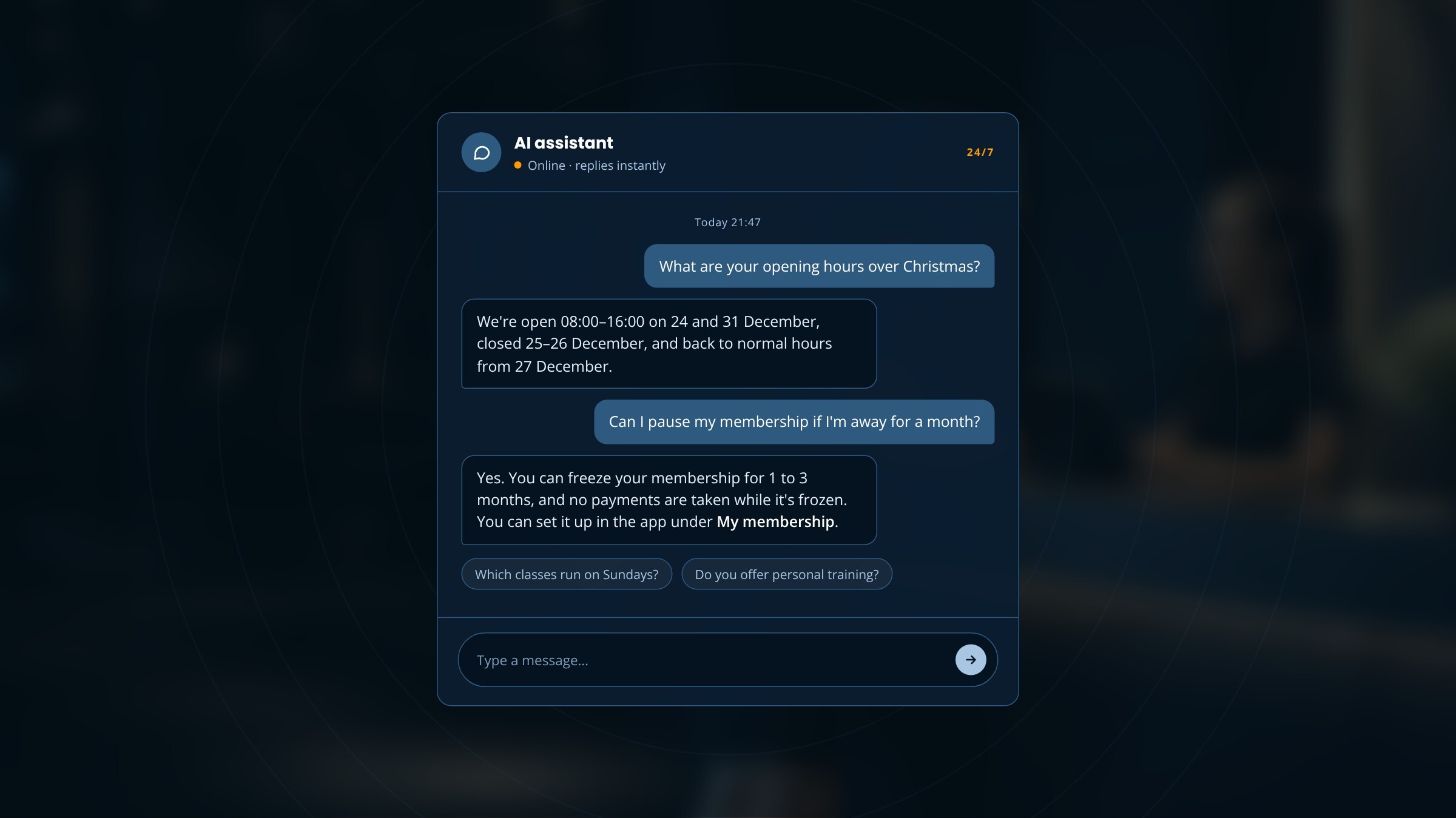
- From Answering to Resolving: Modern consumers expect immediate resolution, not just answers. In the past, tasks like scheduling a booking, handling a payment, or filing a complaint required human intervention and often multiple explanations. Today, AI-driven self-service applications - such as advanced chatbots with semantic understanding - can resolve these issues directly, knowing the full context of the user's request.
- Keeping the Customer (Proactive Retention): Inspired by streaming and telecom services, the focus is shifting from traditional win-back campaigns to continuous behavioral monitoring. AI can detect subtle changes in member engagement - such as a shift in workout frequency - and intervene proactively. This might look like a gentle nudge or a personalized offer presented right before the member decides to churn.
- Seamless Attention: AI can provide personalized attention in an almost invisible way. Much like how music platforms suggest the next song or navigation apps offer alternative routes due to traffic, AI in fitness will be able to analyze member habits and offer relevant suggestions - like the right time to upsell a personal training package - without being intrusive.
The Impact on Club Managers and Operators
For fitness club managers, AI offers solutions that fall into three critical areas:
|
Area of Impact |
Practical Application |
|---|---|
|
Giving Time Back to Staff |
By deploying an AI agent to handle routine inquiries (e.g., membership freezes, class changes, payment checks, opening hours), staff are freed to focus on high-value human interactions, ultimately making the gym experience more personal. |
|
Personalizing the Member |
AI can identify members who haven't visited recently and send friendly reminders, welcome new members with guidance, and even assist personal trainers by analyzing workout habits to help build tailored plans. |
|
Protecting and Growing Revenue |
AI excels at detecting churn risk weeks in advance, allowing operators to launch re-engagement campaigns. Additionally, it can identify the optimal moment to suggest upgrades or personal training based on a member's specific activities and goals. |
A Strategic Starting Point
For operators wondering where to begin, the most effective entry point is focusing on time. Implementing an AI chatbot is currently the lowest-risk approach with immediate, visible benefits. It requires minimal setup, quickly reduces the administrative burden on staff, and provides immediate value to members through 24/7 support.
Once time-saving measures are in place, operators can naturally progress to more complex applications, such as churn detection and revenue protection. In fact, advanced models are already showing the ability to flag a high percentage of at-risk members weeks before they cancel, providing crucial lead time for intervention.
Conclusion
The conversation around AI in fitness has moved beyond theoretical possibilities. The technology is here, and it is accessible. The operators who will lead the industry forward are those who stop viewing AI as a novelty and start deploying it to solve real operational bottlenecks-beginning with giving time back to their most valuable asset: their staff.